Our Story

From Ironmongery to West Midlands' Most Trusted Name

This is the story of James Lister and his descendants, a family whose dedication and innovation have shaped generations. What started with a father and his sons has grown into a legacy of craftsmanship, quality, and care. Throughout our history, we have proudly served both industry and nation, providing vital support during times of crisis, including both World Wars.

At James Lister & Sons, it’s not just about the products we create—it’s about the people, partnerships, and communities we’ve supported for 150 years, and the ones we’ll continue to serve for many more.

JAMES SAW THE END OF THE INDUSTRIAL REVOLUTION AS THE BEGINNING OF A NEW OPPORTUNITY​

James Lister’s vision was rooted in creating a stable and prosperous future for his family during a time of significant change. As a headmaster, he valued education and community, but he saw an opportunity to leverage the industrial progress of his era, particularly in the “workshop of the world,” to build something lasting.

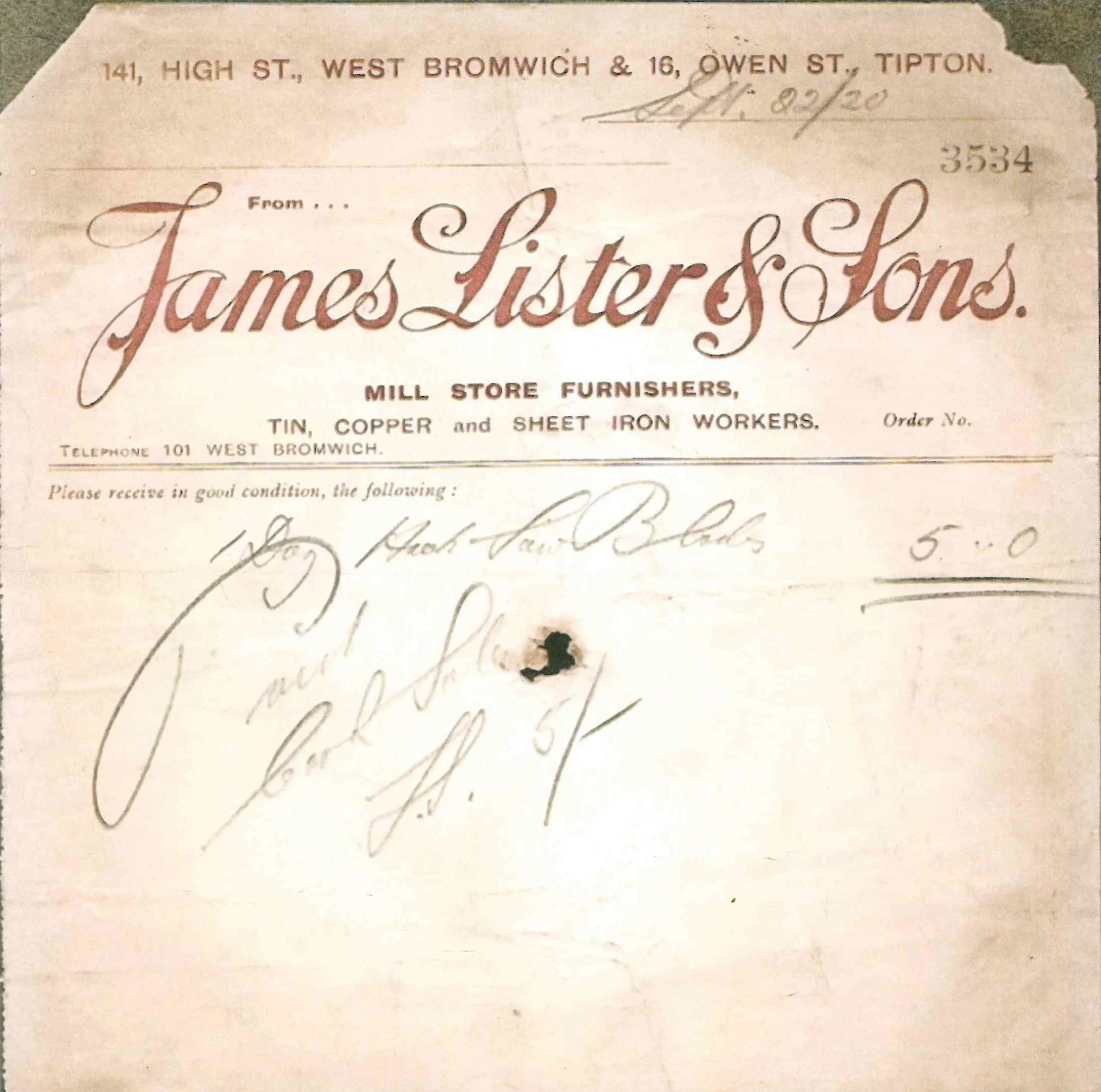
​In 1874, he opened an ironmonger’s shop in Tipton, aiming to provide not just for his immediate family but to establish a legacy of entrepreneurship and resilience. His wife, Lucy, shared this vision, leaving her own career in education to manage the shop, demonstrating their commitment to this new path.

Their decision to expand with a second shop in West Bromwich reflects their ambition and adaptability, key traits that helped them thrive during the post-industrial revolution period.

​James’s vision was not just about business success; it was about creating a foundation for future generations, ensuring that his family could benefit from the economic opportunities of the time while maintaining strong community ties and values. This blend of foresight, dedication, and family unity was central to his approach, which he soon passed on to his sons John and Richard.

THE GUIDING LIGHT FOR SAILORS AROUND THE WORLD

In 1906, John Lister took a bold step by opening a sheet metal factory at Tipton, named Lister Sheet Metal Products. This new venture was set up behind the original Tipton premises, marking a significant expansion of the family’s business operations.

The factory specialised in metal sheet work and employed skilled coppersmiths to manufacture copper hollow-ware, which was exported for use in lighthouses around the world.

THE FIRST WORLD WAR

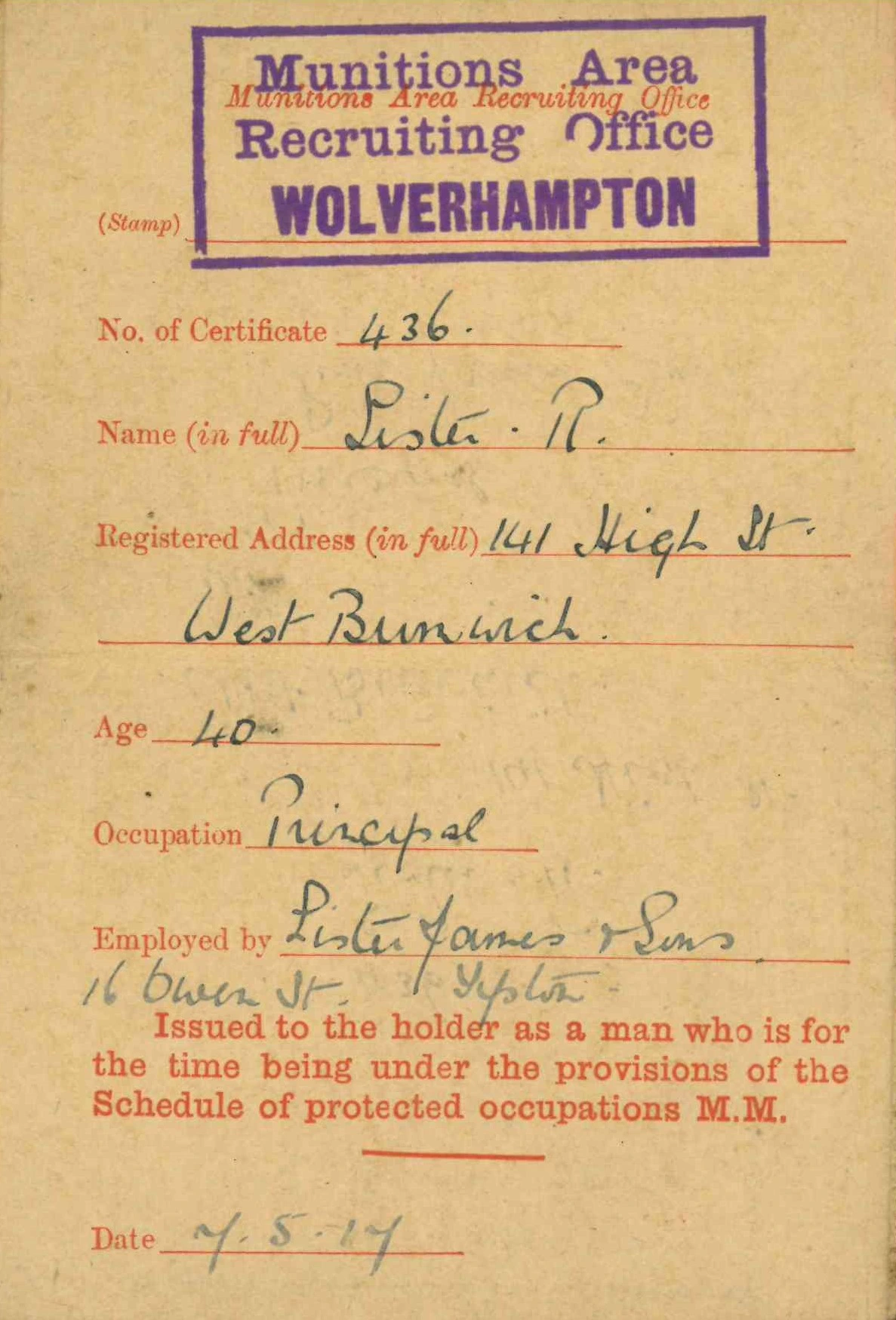
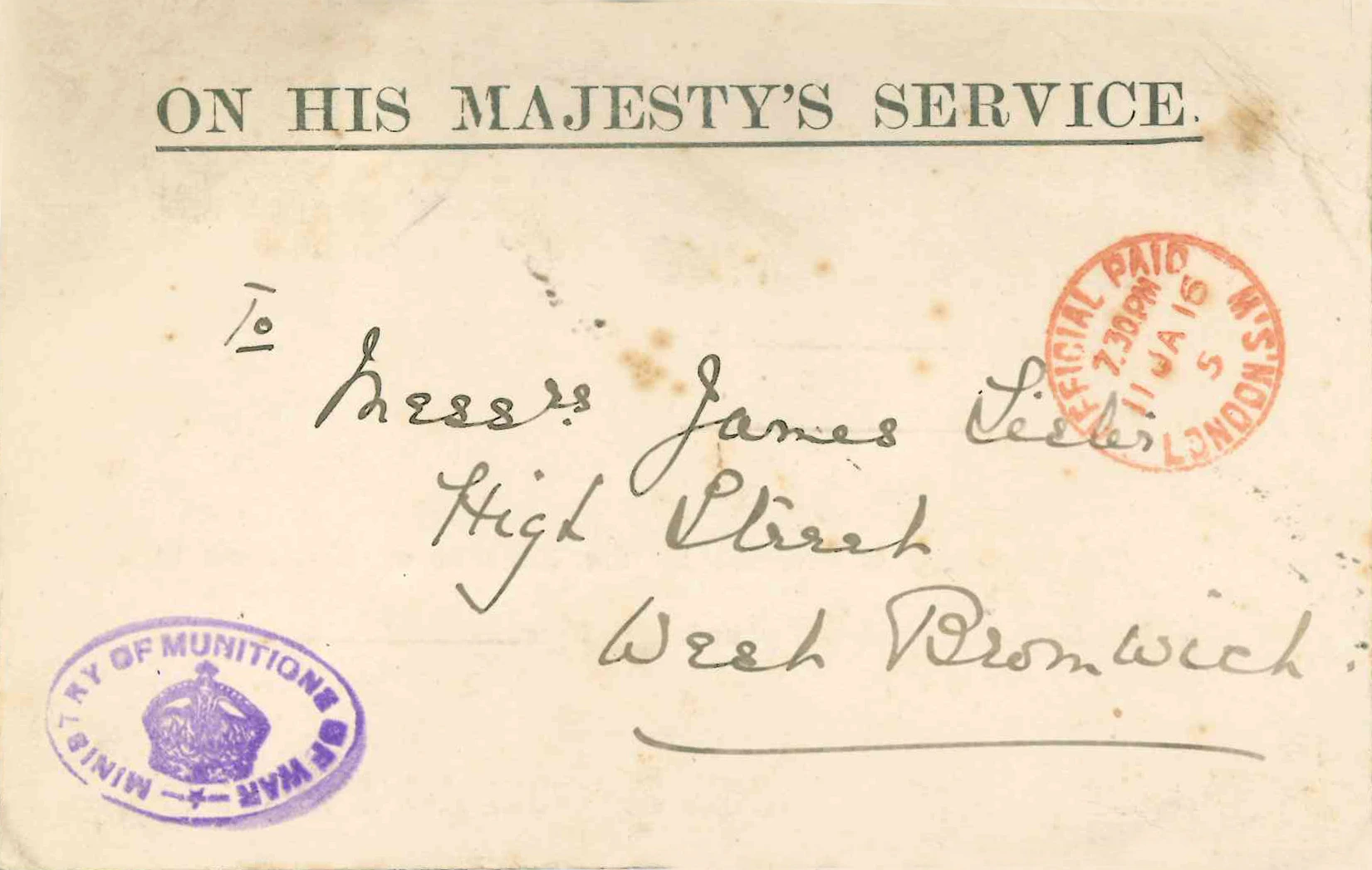
In 1914, as war loomed, businesses faced labour shortages due to conscription. John Paull Lister, just 14, stepped in to help his father, John, with the family business, even making deliveries with a pushcart. After James Lister’s death in 1915, John and Richard transformed the business into James Lister & Sons, focusing on industrial tools.

John Lister passed away in 1916, leaving John Paull and Wallace Paull to help their uncle Richard. Despite labour shortages, they worked tirelessly to keep the business running. Together with their uncle, the third-generation Listers expanded into builders’ merchants, supplying materials for large housing projects in the Midlands.

50 YEARS OF SUPPORTING BRITISH-MADE TOOLS

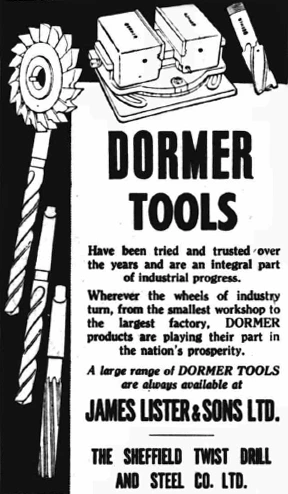
During the war, high-speed tungsten steel revolutionised cutting tools, making them more durable and faster than carbon steel. In 1924, celebrating 50 years of business, the company continued to embrace British-made by stocking these innovative tools, despite the strong demand for American-made counterparts.

In 1931, Richard’s stepson Launcelot (Lance) joined the family business at the age of 15, starting with humble tasks like sweeping floors, making deliveries, and working at the trade counter. 

THE MUNICH TREATY MAKES WAY FOR A NEW VENTURE

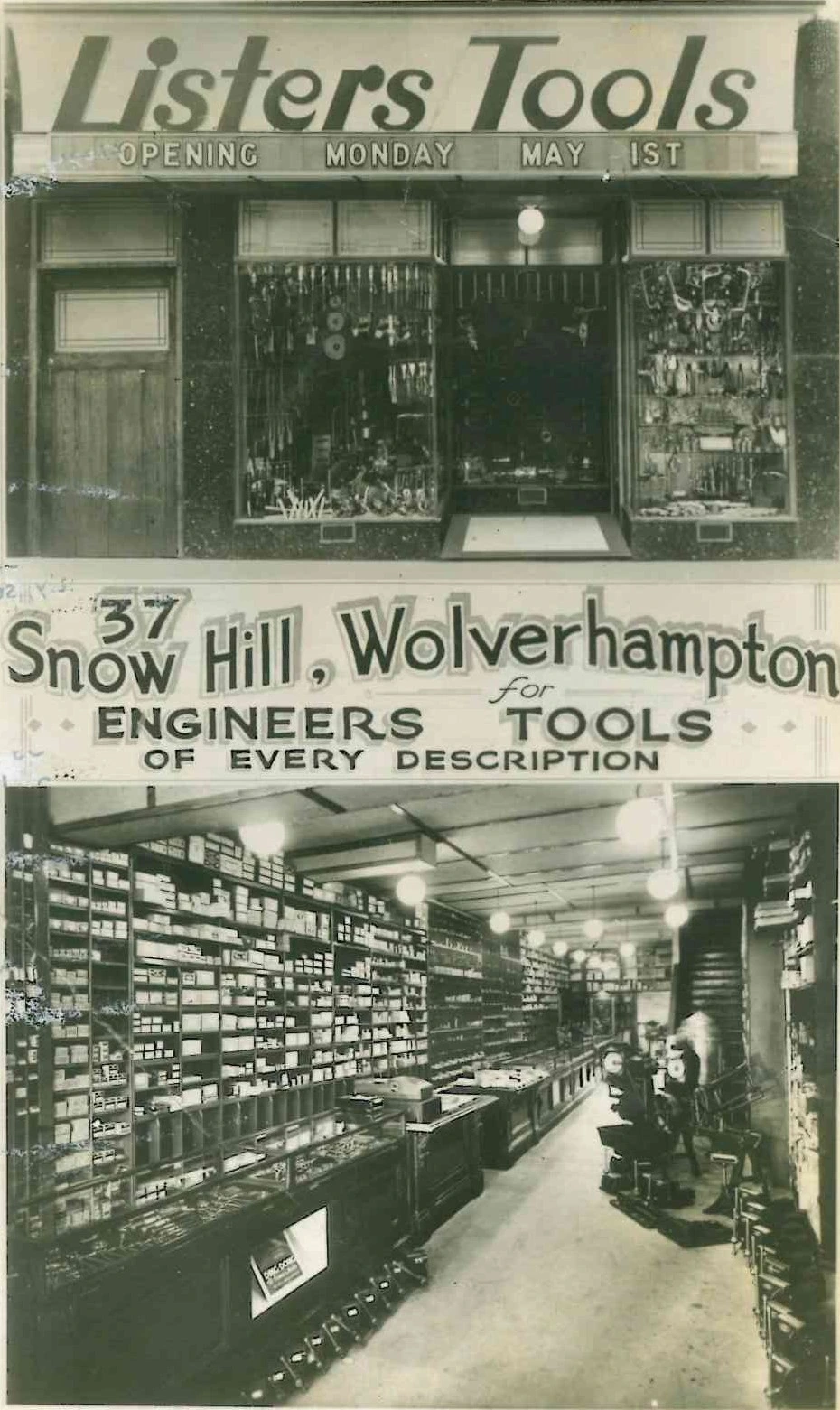
Mr. Stanley Charles Icke, a business friend, persuaded JP Lister to expand the tools business to other towns. They formed a new company, Listers Tools Ltd., and secured premises at Snow Hill, Wolverhampton. Although the venture was temporarily abandoned due to the threat of war, it finally launched after the signing of the Munich Treaty in May 1939, with Mr. Icke as chairman and Wallace managing operations.

WARTIME RESILIENCE​

The Lister Family’s Crucial Contributions

The advent of World War II was no ordinary time. Once again, the Lister family was thrust into the turmoil of war. Lance Lister and Wallace Paull Lister, along with many employees enlisted in the military, leaving John working tirelessly to keep both the sheet metal factory and the tools business afloat.

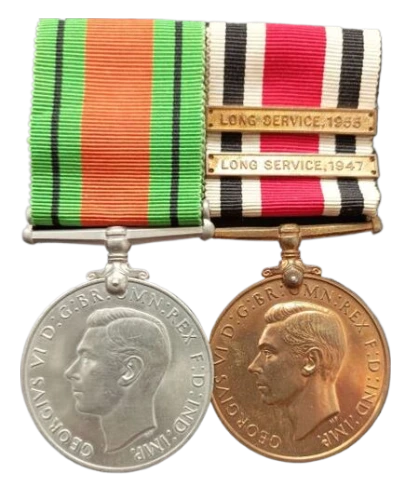
Wallace joined the Staffordshire Special Constabulary and served throughout the war, earning the Special Constabulary Long Service Medal in 1942, with his war service counting treble. After the war, he was awarded the Defence Medal and continued his service in the Special Constabulary, receiving his first clasp in 1947 and a second in 1955.

James Lister & Sons’ supplies were instrumental in supporting the wartime production of The Horseley Bridge & Thomas Piggott Limited, which manufactured mines, armoured plate bodies for ‘Beaverette’ tanks, and repaired bomb-damaged gas holders in Coventry, Smethwick, and Cardiff. Additionally, the company’s supplies aided the General Electric Company in producing essential equipment such as radars, valves, and lighting systems for the Allied Forces, playing a crucial role in the war effort.​

DUST EXTRACTORS PATENT FOR GLOBAL EXPORT

Even through challenging times, the Lister family remained deeply committed to innovation, always looking for ways to adapt and thrive in changing markets. The late 1930s were particularly difficult, with the world on the brink of war and economic uncertainty looming large. Yet, instead of retreating, the Listers saw an opportunity to leverage their in-house expertise in metalwork to create solutions that would drive the business forward.

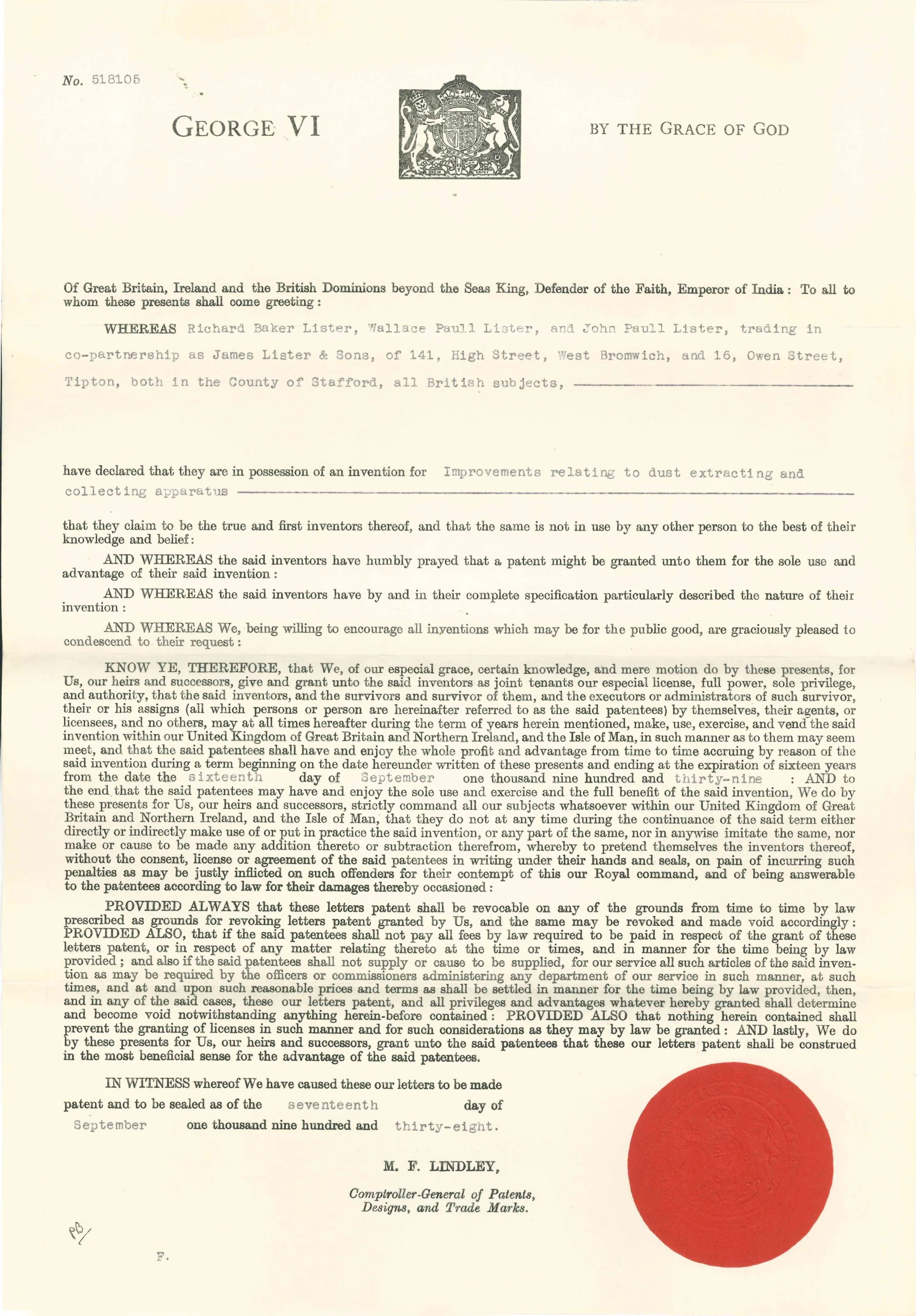
In 1939, the company filed a patent for an improved dust extraction system designed specifically for grinding and polishing equipment that were essential for a variety of industrial applications. Dust and debris generated during these processes were a significant problem, often leading to machinery malfunctions and health hazards for workers. Recognising this gap in the market, the Listers focused their engineering skills on refining the existing technology to create a more efficient and effective dust extractor.

Their innovation didn’t just improve the safety and efficiency of industrial operations in the UK; it also opened new avenues for global trade. Manufacturing began at their Tipton-based sheet metal factory, and before long, the improved dust extractors were being exported to the United States, where industrial demand was high. This not only diversified their revenue streams but also established James Lister & Sons as a forward-thinking, internationally recognised brand.


EXPANSION AND MOVE TO NEW PREMISES

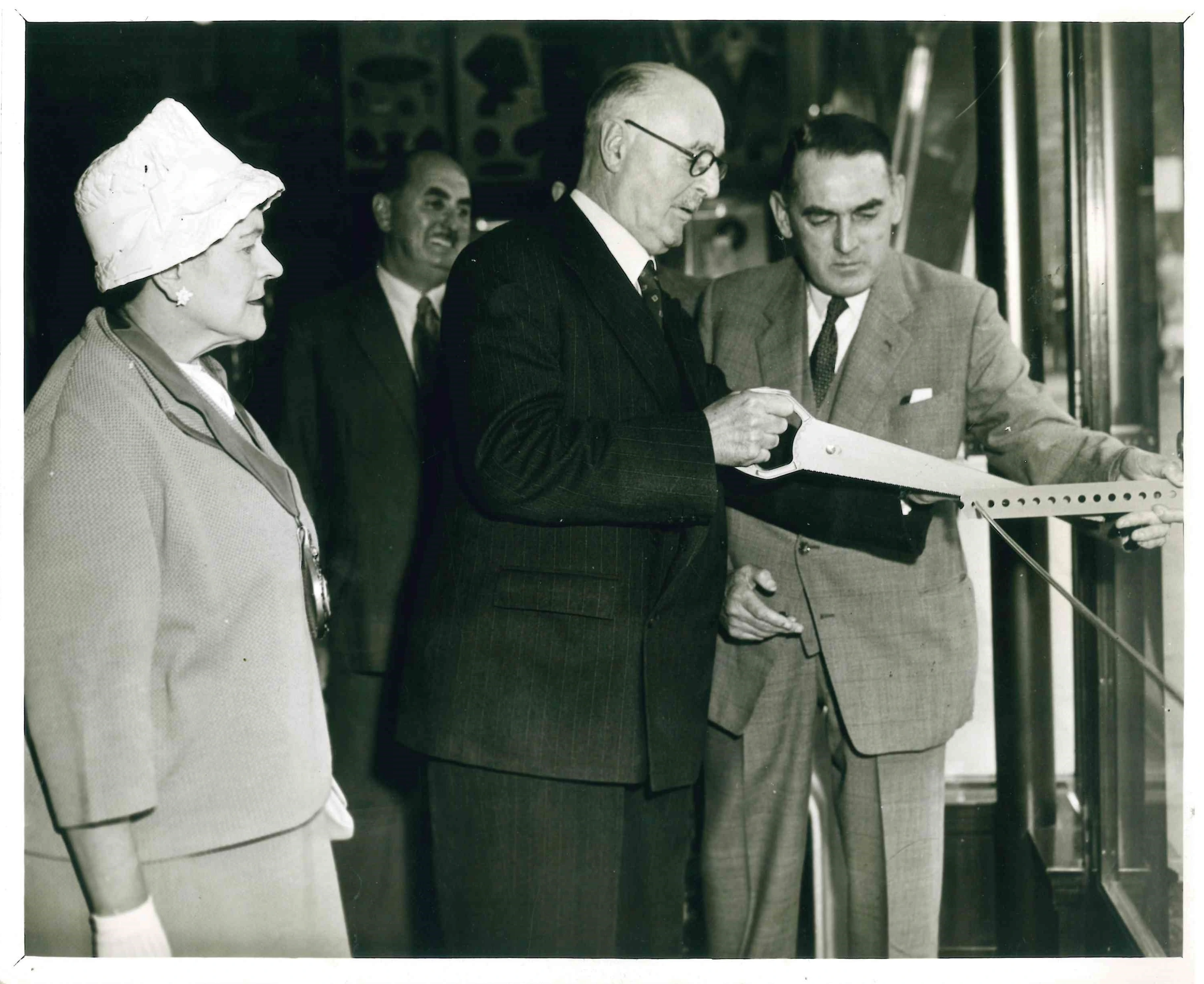
The post-war years saw remarkable growth for James Lister & Sons. By 1957, the company was officially incorporated, and in 1961, they relocated their headquarters to Smethwick. This new site, spanning three-quarters of an acre, marked a significant leap in their operations, with a modern showroom and expanded warehouse space. It was inaugurated by Col. Sir Frederick Neill in the presence of Cllr. Minnie Evitts, Mayor of West Bromwich.

DIVERSIFICATION & RISE OF THE FOURTH GENERATION

The 1960s brought both expansion and diversification. James Lister & Sons entered the LPG and leisure equipment markets, ensuring steady income during seasonal lows. By 1963, the fourth generation of Listers, Paul and William, joined the business. The following years saw further expansion, including a move to new premises in Tipton, modernising the company’s infrastructure and positioning them for the future.

100 YEARS STRONG:
A HAT-TRICK ADORNED BY ENGLAND'S HAT-TRICK HERO​

1974 was a landmark year for James Lister & Sons, marked by three monumental achievements.

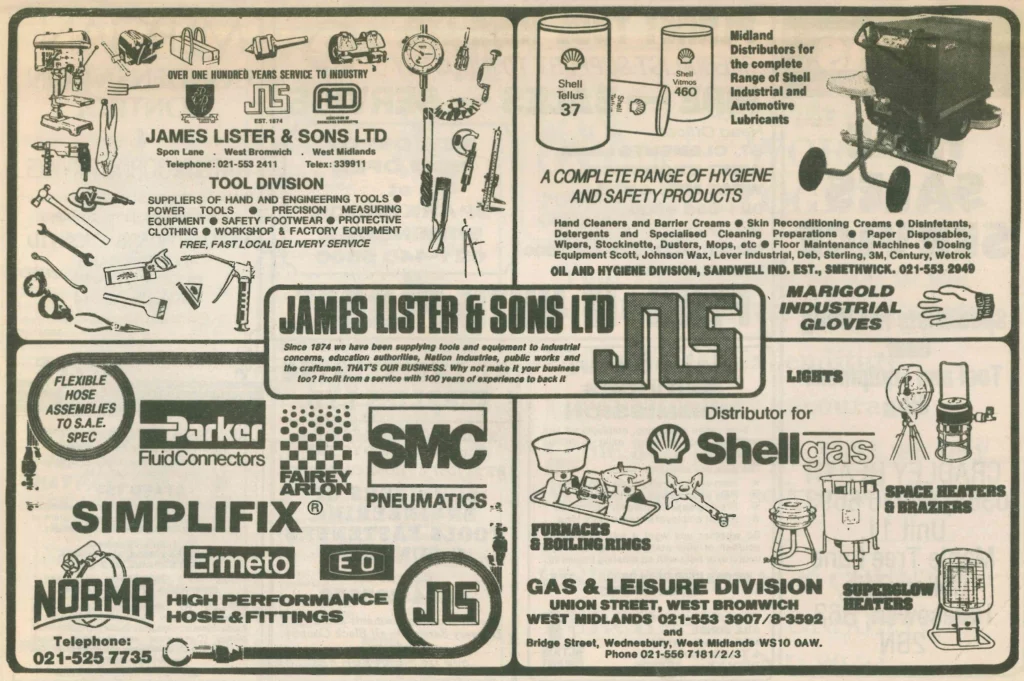
First, the company celebrated a century of excellence, reaching its 100th anniversary after decades of growth and innovation. The milestone was widely covered in newspapers, bringing attention to Listers’ remarkable journey from a small ironmongery shop to a thriving business. To mark the occasion, a grand gala celebration was held for customers and suppliers, reflecting the strong partnerships the company had built over the years.

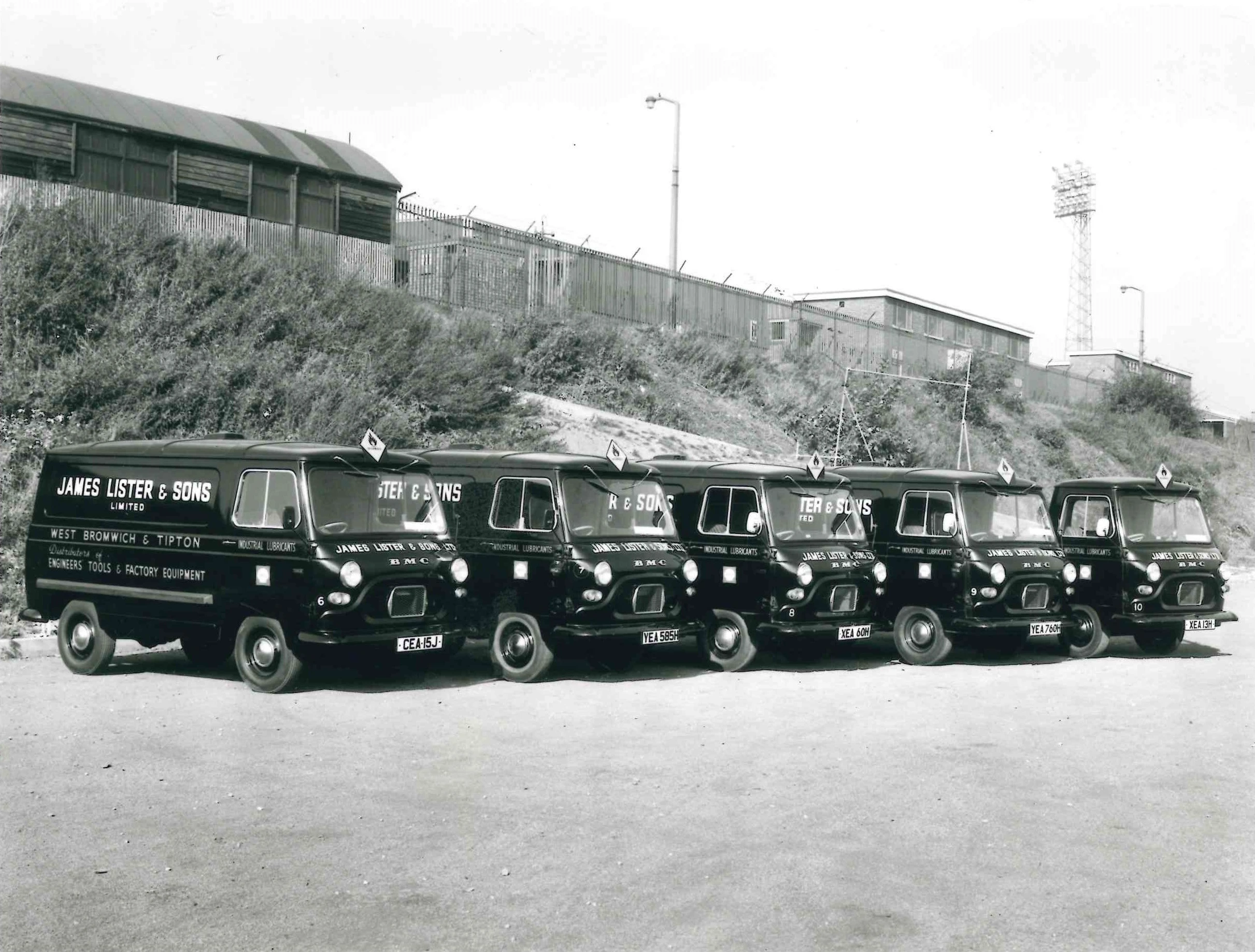
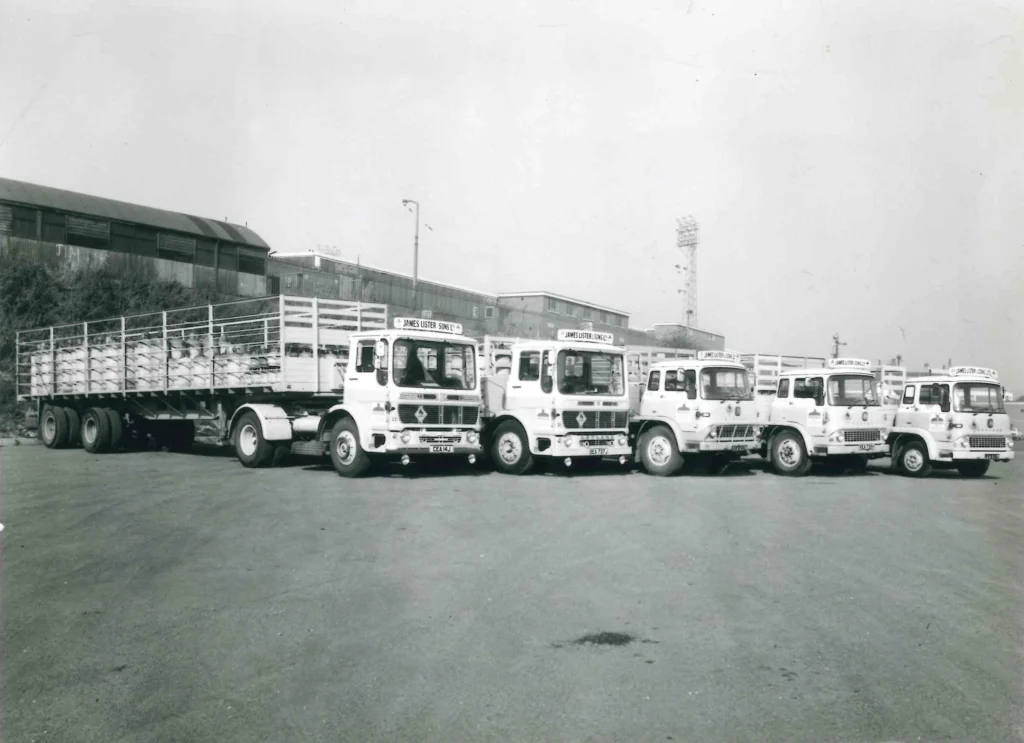
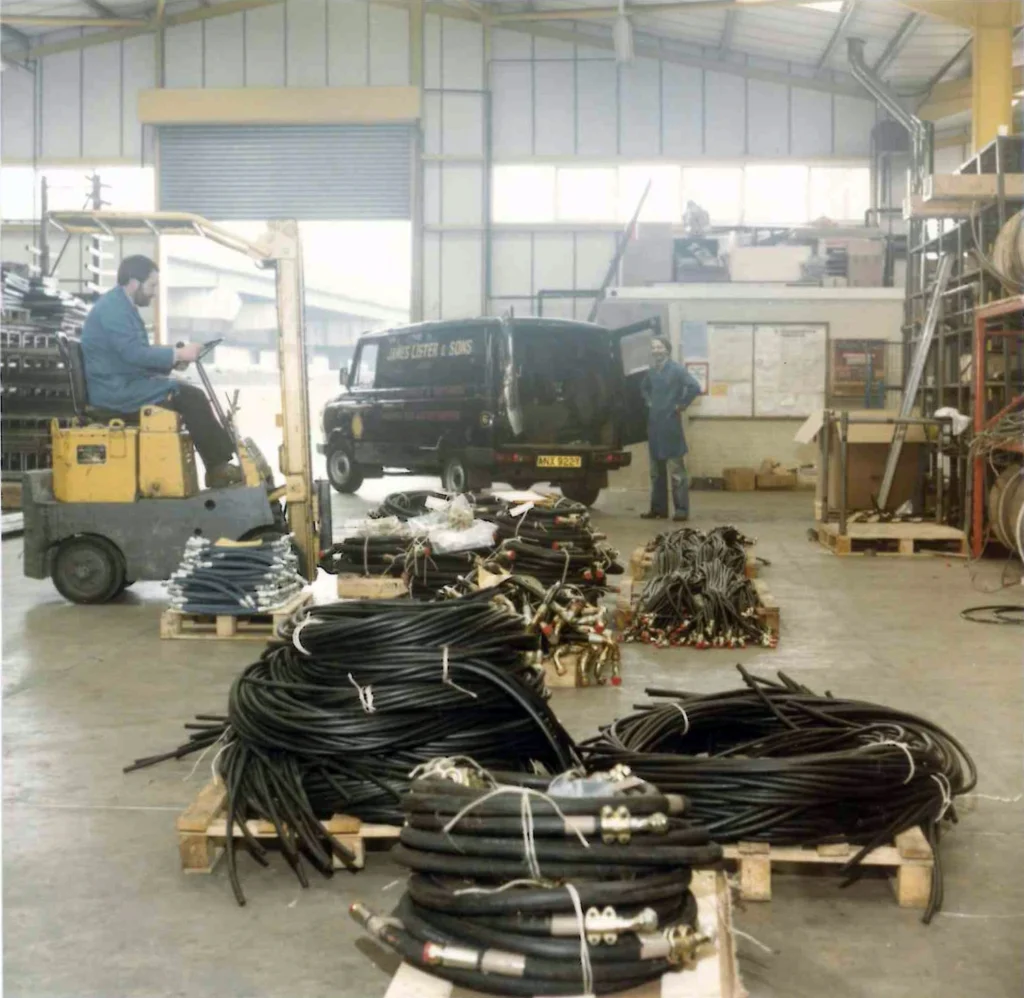
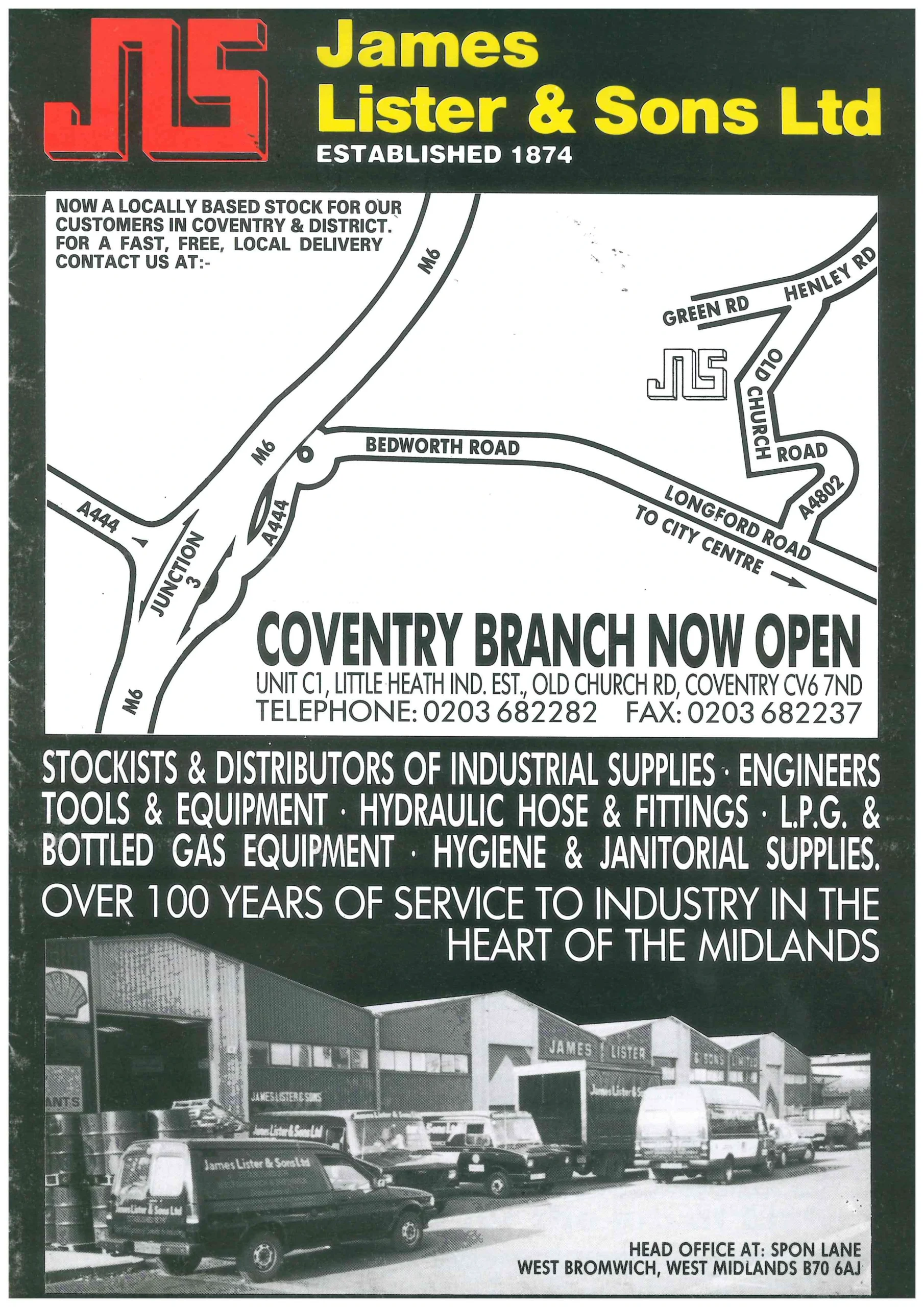
Deliveries, once made with handcarts, were now efficiently handled by a fleet of 40 vans, symbolising a new era of growth, modernisation, and the company’s forward-looking vision for the future.

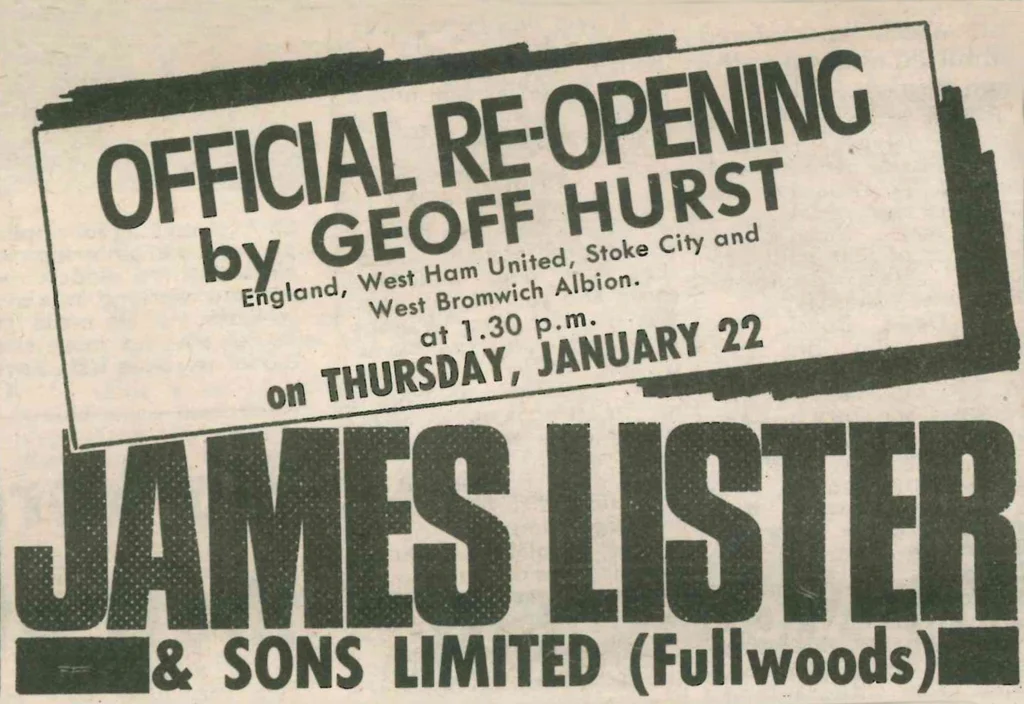
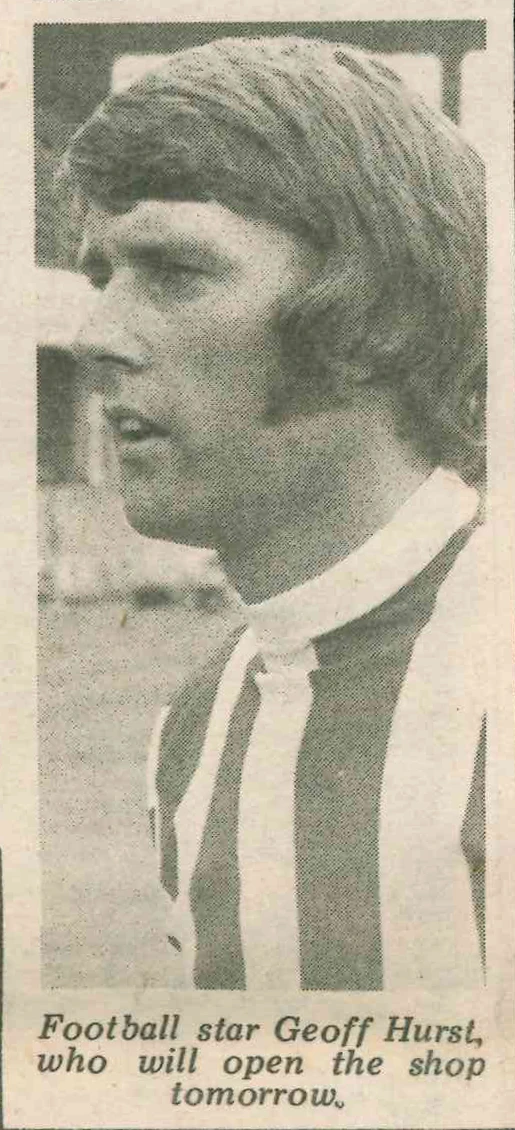
Second, the acquisition of Fullwoods Army and Navy Stores expanded their leisure division, introducing a renowned chain of shops to serve the booming outdoor market. However, tragedy struck soon after, when a devastating fire consumed one of the stores. But from the ashes, the company rose stronger than ever. In a triumphant moment of renewal, England’s hat-trick hero, Geoff Hurst, graced the grand re-opening, symbolising the company’s resilience and ability to overcome challenges just as they had done for a century.

​​Finally, the business launched its new Fluid Power Division. Antony Lister, son of Lance Lister, was mainly responsible for this strategic move – one that would eventually create a new niche for the company.

​​Antony’s leadership and vision were crucial in steering the company towards this innovative direction, ensuring that James Lister & Sons remained at the forefront of industrial advancements.   

AIR JACKS FOR ASTON MARTIN RACING

In 1986, a specialised sub-division, JLS Motorsports, was formed to cater for the high performance automotive industry. By supplying bespoke air jacks for brands like Aston Martin Racing, the company carved out a niche in this competitive field. JLS Motorsports has subsequently become one of the world’s leading manufacturers of air jacks for touring cars.

ELEVATING RICHARD BRANSON’S VIRGIN GLOBAL CHALLENGE

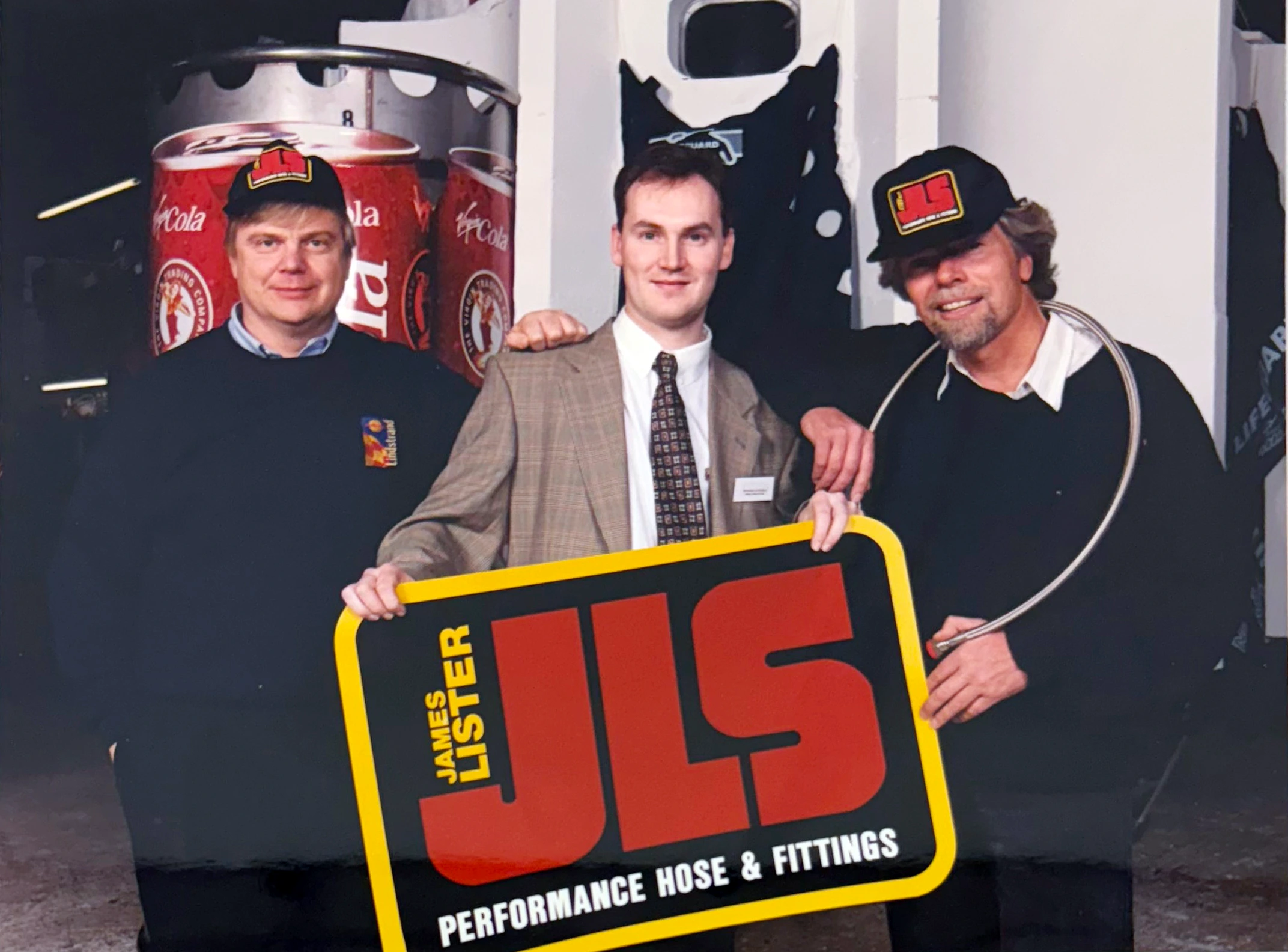
Sir Richard Branson’s daring ballooning expeditions from crossing the Atlantic to attempting to circumnavigate the globe have long captured the imagination of adventurers around the world. Behind the scenes of these sky-high feats lies an unsung hero: the reliability of Lister Fluid Power’s hydraulic hose technology.

During the 1996 Virgin Global Challenge, Lister Fluid Power played a critical role by supplying bespoke hydraulic hoses that ensured a continuous flow of oxygen to the pressurised pod sheltering Branson and fellow adventurer Per Lindstrand. At high altitudes and under shifting pressures, failure was not an option. The hoses were designed with oxygen compatibility, high-pressure resilience and ultra-clean specifications. They included safety-critical features like gauges and bleed valves.

This remarkable collaboration is more than a moment in history. It’s a testament to our enduring commitment to precision, safety and performance. When lives depend on fluid transfer under extreme conditions, Lister Fluid Power delivers so that pioneers like Sir Richard Branson can push the boundaries of possibility.

POWERING MG’s 1997 BONNEVILLE SPEED ATTEMPT

James Lister & Sons played a key role in the 1997 Bonneville attempt by the MG F with Terry Kilbourne at the controls, providing bespoke hydraulic systems for the vehicle. While the record wasn’t broken, the effort underscored Lister’s engineering expertise in motorsport. The custom hydraulic components they supplied offered critical support for controlling the car at extreme speeds of up to 217 mph on the Salt Flats.

STRATEGIC ACQUISITIONS AND EXPANSIONS​

The early 1990s marked a period of aggressive expansion for James Lister & Sons, as the company strategically acquired several key businesses to broaden its influence in the industrial market. In 1991, Lister purchased Robinson & Sons, which became the foundation of their Redditch branch. The following year, in 1992, Lister acquired Arrow Hydraulics and Alan Scott Tubing, opening the door to valuable partnerships, including their first contact with Whale Tankers—a relationship that would grow significantly over the coming decades. Additionally, their role as a distributor of Bundy Tube proved lucrative, contributing to steady growth over the next thirty years.

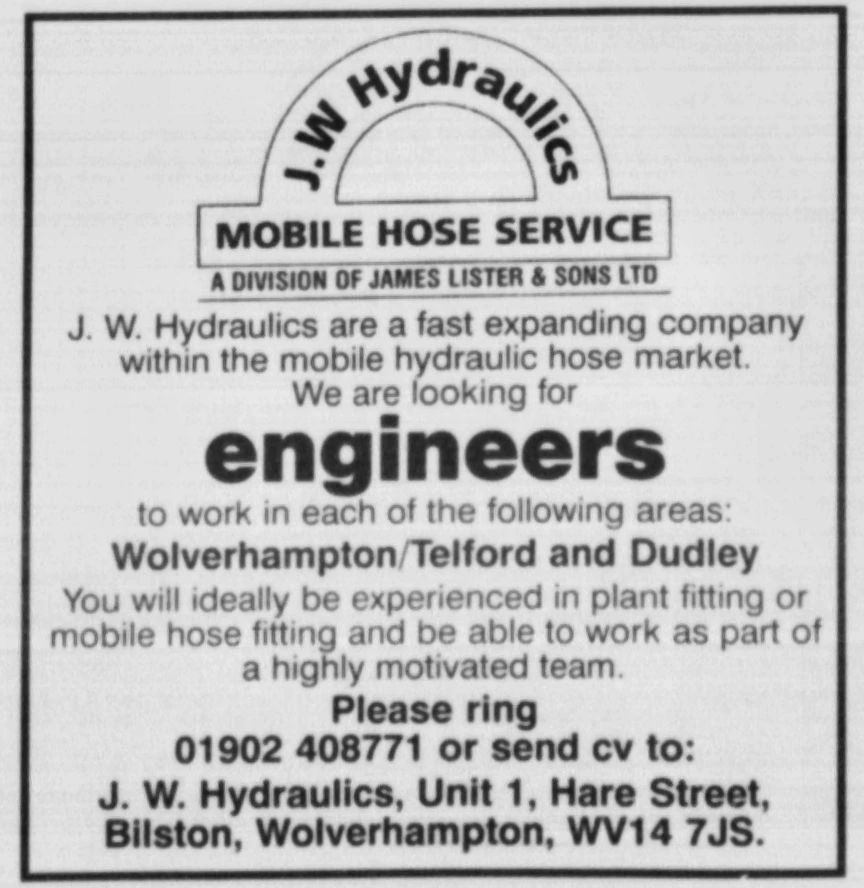
The expansion continued in 1993 with the acquisition of Tamworth Tool Supplies, which extended Lister’s influence into the Tamworth and Lichfield areas. In 1994, they bolstered their Birmingham customer base with the purchase of E.G. Andrews, adding the reselling of Ground Flat Stock to their offerings. That same year, Lister also acquired JW Hydraulics, introducing mobile hydraulic repair services into their operations—another pivotal service that would enhance their reputation in the field.

By 1995, Lister had made several smaller acquisitions, including GAF Tools in Bloxwich, Greville Industrial Supplies in Redditch, and RPM Industrial in Brierley Hill, further expanding their customer network and solidifying their presence across the West Midlands. These acquisitions positioned Lister for continued growth and diversification as they entered the next phase of their business evolution.

THE NEW MILLENIUM

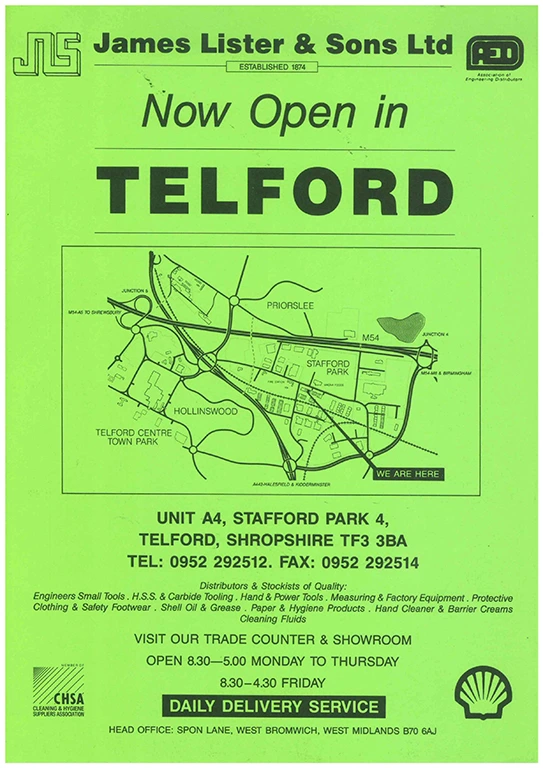
As the new millennium dawned, James Lister & Sons operated 14 distribution and manufacturing sites, mainly in the West Midlands, with additional locations in Southern England and South Wales. This network was later consolidated into six key sites. In 2003, the acquisition of Hughes and Holmes added branches in Telford, Wolverhampton, and Great Bridge, further expanding their reach.

The company continued to grow in 2004 by acquiring P.M. Tools and Fasteners in Wolverhampton, securing a crucial partnership with Moog Aerospace, a major client. In 2006, Lister extended its footprint into South Wales with the acquisition of Usk Valley Fluid Power in Abergavenny, enhancing their capabilities and influence in the region.

A NEW ERA

By 2010, the fifth generation of Listers, Richard, Tim and Mike Cotterill, had taken full control of the business. Peter Davies joined as CEO, bringing extensive international business management experience and helping drive the next phase of growth. Under their leadership, James Lister & Sons continued to innovate and identify new opportunities for expansion.

The launch of Listertube in 2011 marked an important milestone in the evolution of James Lister & Sons. Established as the Group’s third division, Listertube was created to provide rigid tube solutions that complemented Lister’s established hydraulic hose offering. While initially focused on fluid power applications, the business quickly expanded into a broad range of industries, laying the foundations for long-term growth.

As demand increased, Listertube relocated in 2012 to part of a 12,000 sq ft manufacturing facility in Redditch. During this period, the business also achieved certification to internationally recognised standards for quality management (ISO 9001), environmental management (ISO 14001), and occupational health and safety (OHSAS 18001, now ISO 45001), reinforcing its commitment to operational excellence and customer satisfaction.

Investing in Capability and Efficiency

The business entered a new phase of development in 2015 with the acquisition of Tubetech’s assets and customer base, with operations transferred from Letchworth to Redditch. 

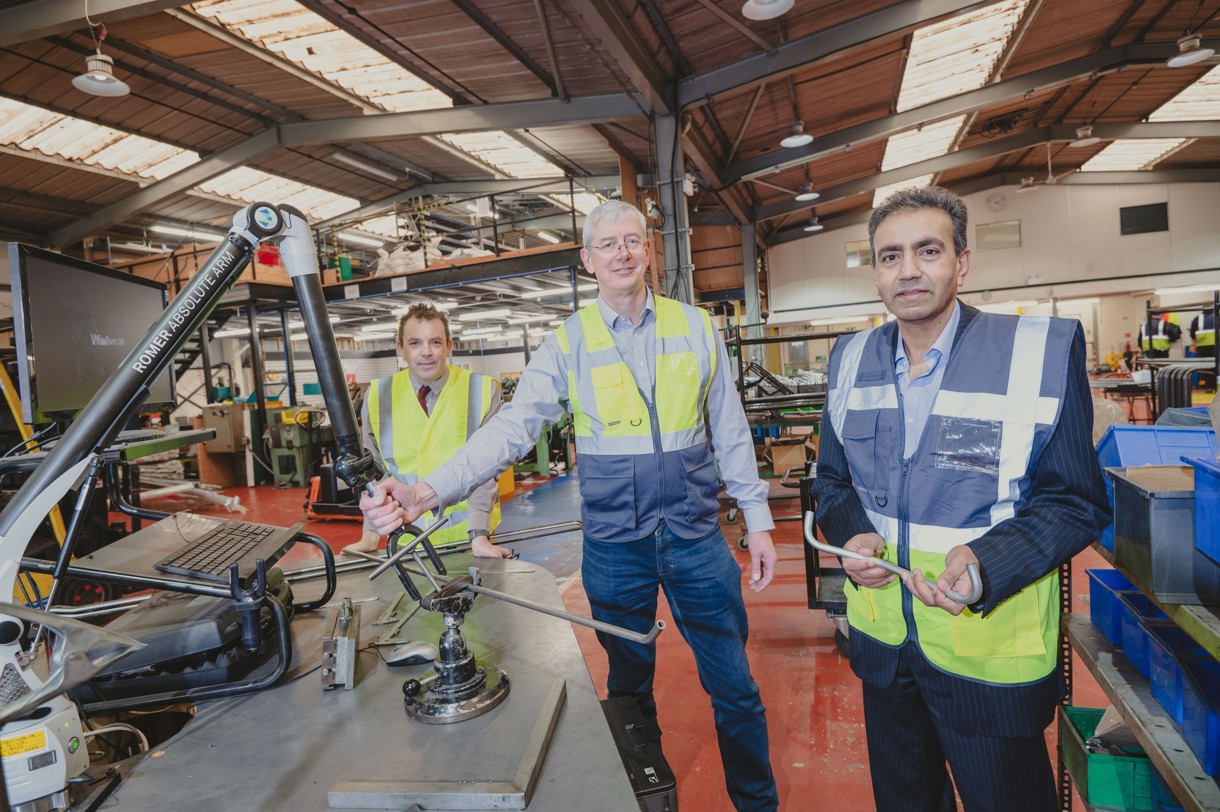
This strategic investment expanded Listertube’s technical expertise, manufacturing capabilities and customer reach. Further investment followed with the installation of a 50mm diameter double-stack tube bending machine, combining draw/mandrel and push-roll bending technologies to support increasingly complex customer requirements.

introducing advanced manufacturing tech

In 2019, Listertube expanded its tube manipulation capabilities with the purchase of a 25mm left and right-hand CNC tube bending machine, increasing its fleet to nine CNC bending machines and providing tube bending capabilities from 4mm to 76mm diameter.

Continued growth across the Group led to a significant milestone in 2020, when Listertube took sole occupancy of the Redditch facility following the relocation of other Lister activities. The additional space created greater production capacity and provided a platform for further expansion.

warwick manufacturing group gets involved

Innovation became an increasingly important part of Listertube’s strategy in 2021, when the company collaborated with WMG through the Made Smarter programme to develop the capability to 3D print tube bending and forming tooling for tube diameters up to 35mm. This pioneering approach significantly reduced tooling lead times and costs for selected applications, improving responsiveness for customers.

£400,000 technology investment

In 2022, Listertube undertook a comprehensive review of its manufacturing operations. Factory layouts were redesigned and enhanced routing and scheduling systems introduced to maximise throughput and efficiency. Building on the ERP platform implemented the previous year, these improvements supported the company’s continued strong growth trajectory.

150 YEARS OF RESILIENCE AND INNOVATION

In 2024, James Lister & Sons celebrated an incredible milestone: 150 years in business. As part of its continued expansion, the company acquired another tube components business, Kewtube, and relocated it from London to Redditch. This strategic move further solidified Listertube’s position as one of the UK’s foremost tube manipulators, serving a wide range of fluid power customers as well as many other sectors.

From its humble beginnings as a small ironmongery shop to becoming a leader in fluid power solutions, James Lister & Sons has demonstrated an unwavering commitment to excellence, resilience, and innovation. As we look to the future, the brand remains firmly rooted in its rich history while embracing cutting-edge technologies that will drive the next century of success.

Scroll to Top